Choosing the Right Loft Ladder for Your Home: Space, Safety and Budget
Practical guidance on the main loft ladder types, how to measure ceiling height and hatch position, safety and accessibility considerations, when to call a professional in Maidstone, Kent and South London, and what to expect at installation.

Why the right loft ladder matters
A loft ladder is more than a convenience: it affects how safely and easily you use your loft for storage or access to services. The right choice depends on your ceiling height, where the hatch sits, who will use it, and how often. This article walks through the main ladder types, practical measuring tips, safety and insulation considerations, when a professional survey is advisable, and what to expect during installation — with local context for homeowners in Maidstone, Kent and South London.
Common loft ladder types — pros and cons
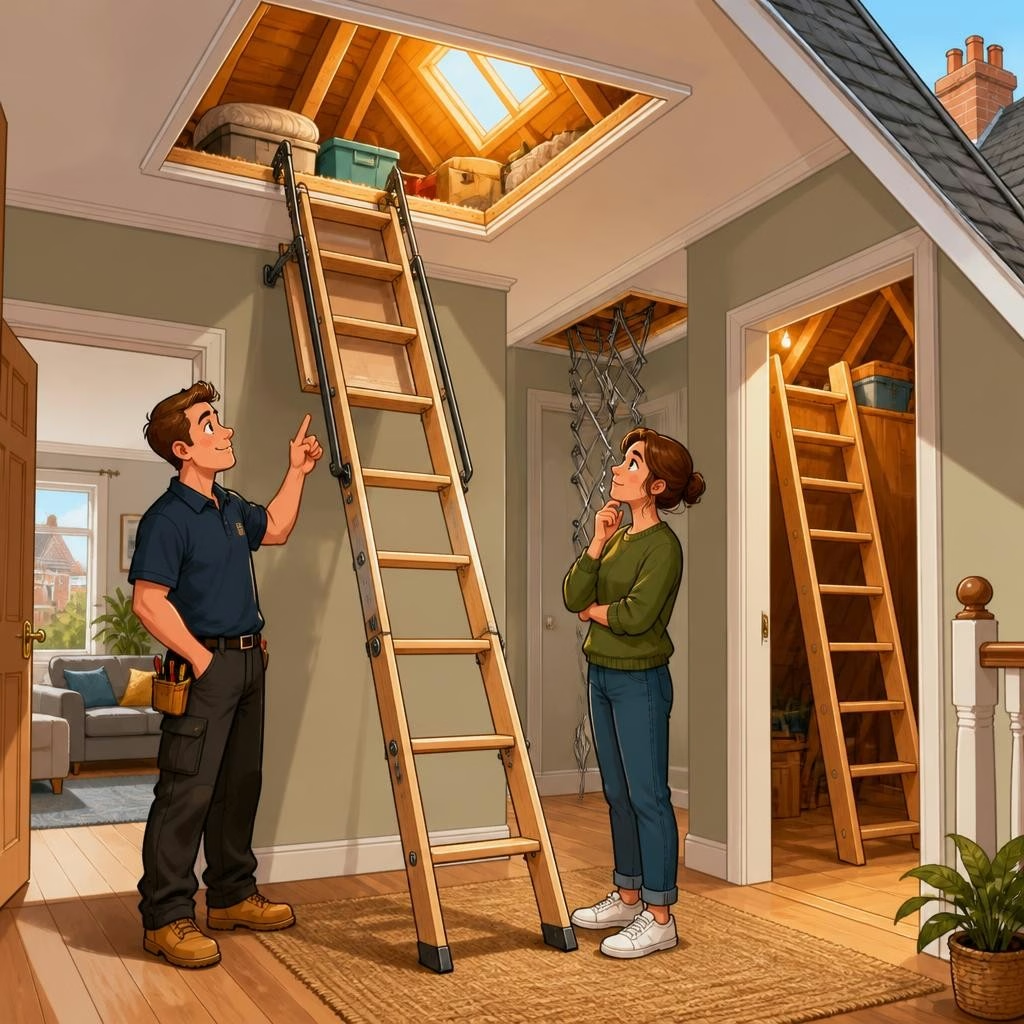
Drop-down (folding) ladders: A popular, cost-effective option that folds into three or four sections and drops down from the hatch. They’re quick to use and suit standard ceiling heights. Telescopic ladders: Compact and easy to store, telescopic ladders extend and retract to fit different heights; they’re a good choice where space is tight. Wooden loft ladders: Often sturdier and visually warmer, suitable when a more traditional look is wanted. Fixed loft stairs: If you use the loft frequently or converting it to living space, a fixed stair is the safest and most comfortable solution, though it requires more space and structural work. Each type balances space, convenience and cost differently — think about how frequently you’ll climb the ladder and what fits the loft hatch area.
Measure ceiling height and hatch position correctly
Before choosing a ladder, take three basic measurements: (1) floor-to-ceiling height in the room below the hatch, (2) the hatch’s position relative to joists and nearby walls, and (3) the clear opening size of the loft hatch. Ceiling height determines whether a folding ladder will reach comfortably or whether a telescopic or custom solution is needed. Hatch position affects the swing of a drop-down ladder and whether handrails or a slight repositioning will be required. If the hatch opening is small, you may need a larger hatch cut or a specialist ladder that fits narrow openings.
Mobility, safety and insulation considerations
Think about who will use the ladder and how safe it needs to be. Look for features such as non-slip treads, sturdy handrails, secure locking mechanisms and a stable attachment to the hatch frame. If older family members or children will use the ladder regularly, a fixed stair or a ladder with robust handrails is worth considering. Don’t overlook insulation and airtightness around the hatch: loft hatches are a common place for heat loss. Boarding and sealing around the hatch, plus quality insulation in the loft, help retain heat and are services that many homeowners choose alongside a new ladder.
Budget, durability and material choices
Budget will influence whether you buy a basic folding ladder or invest in a higher-spec telescopic or fixed stair. Aluminium ladders are lightweight and low-maintenance; timber ladders can be more rigid and match older properties better. Higher-use scenarios benefit from more robust materials and stronger fixings. Keep in mind that a modest extra upfront spend on a sturdier ladder, better fixings and proper installation often pays off in longevity and safety — especially if the loft will be accessed frequently.
When to call a professional for an assessment
A professional assessment is recommended when a hatch needs enlarging, timbers must be raised for boarding, roof windows or services are nearby, or the existing ladder is damaged or unsafe. Structural issues, insulation upgrades, and integrating lighting or electrical routing are also reasons to get a pro involved. Local customers frequently report that rapid, professional help saves time and avoids mistakes; for example, one customer noted that the team responded quickly, arrived on time and fitted a new hatch and drop-down ladder, leaving them pleased with the result. A trained installer can confirm suitable ladder types, check clearances and recommend any additional work such as boarding or insulation.
Preparing for installation and next steps
To prepare: clear a working area beneath the hatch, remove fragile items from the loft edge and ensure access to the property on the day. Expect installers to check measurements, confirm the plan with you, and leave the area tidy once the job is complete. Reviews from local homeowners commonly highlight punctuality, friendly workmanship and tidy finishes, as well as the ability to attend at short notice when needed. If you’re in Maidstone, elsewhere in Kent or South London, consider contacting a local loft specialist for an on-site assessment so you get a recommendation tailored to your ceiling height, hatch position and budget.
Customer review


Article by
AW Lofts
A W Lofts is a small family run company. Established in 1989 we have over 20 years of experience working in all things to do with lofts, from loft conversions to loft lighting. Based in Maidstone, Kent, we work in the South East of England and London specialising in, loft conversions, loft windows, loft ladders, loft insulation, loft hatches, loft boarding and loft lighting. No job is too small. At AW Lofts we will make sure that everything regarding your loft ladder installation is fitted to the very best professional way it can be. With AW Lofts you can be rest assured that your every want and need for your loft ladder fitment is carried out to the very highest standards, by professionals who know what they are doing.